
Stencil Materials for Beginners - Choose the Right One for Your Project
Not sure which stencil material to use? This beginner's guide covers paper, plastic, rubber, and more - with honest advice on durability, cost, and which material suits your project.
Stencil Materials for Beginners - Choose the Right One for Your Project
When you're starting out with stencilling, the material question can feel overwhelming. Walk into any craft shop and you'll see everything from thin paper to rigid plastic to rubber sheets. Which one actually works? Which one is worth your money? I've tested pretty much all of them, and I want to share what I've learned so you can start smart instead of learning the hard way.
Overview of Stencil Materials
Right, let's talk about what's actually available. There are genuinely good options at every price point, which is brilliant. The trick is matching the material to what you're actually going to do with it.
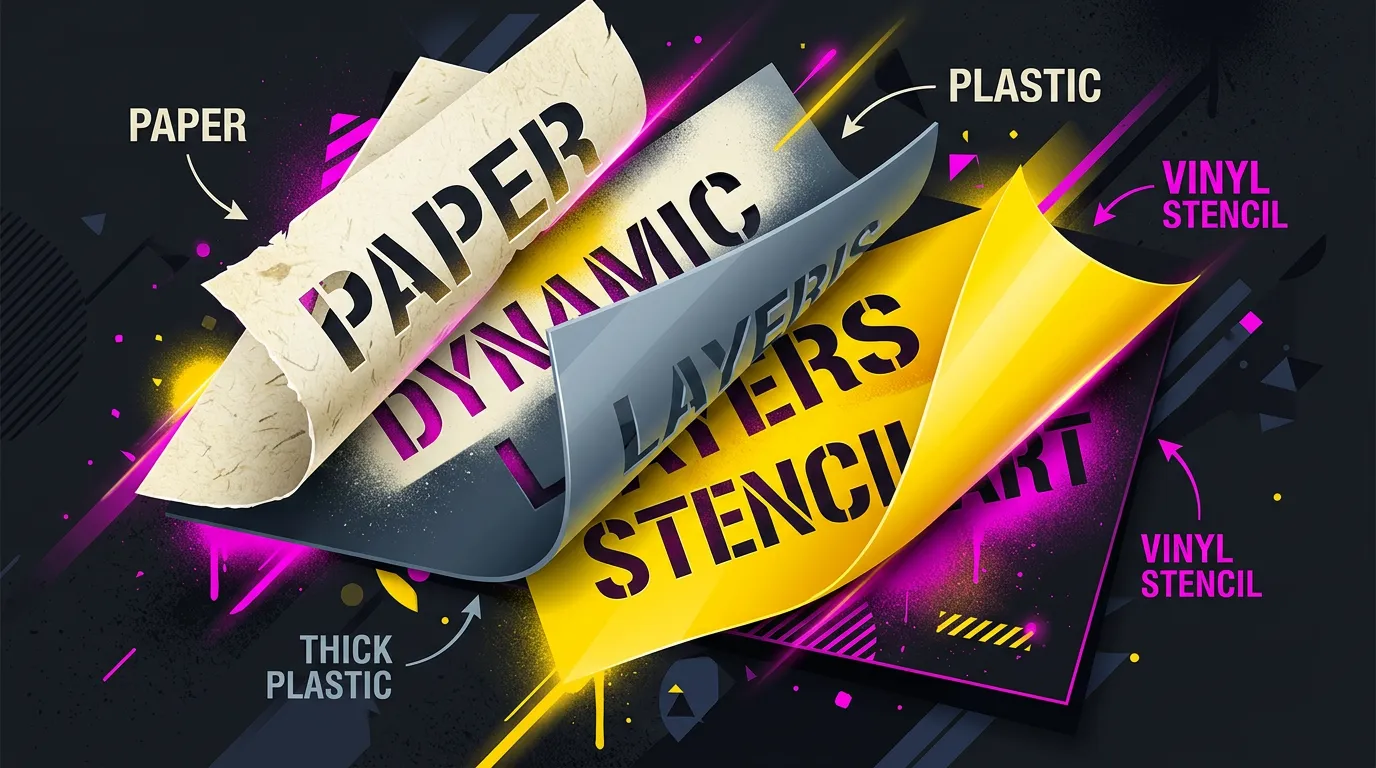
Paper is the obvious starting point. It's cheap, it's everywhere, and you can cut it with almost anything. The downside? It doesn't last. Paper drinks in moisture, it gets soft when you use water-based paints, and it wears out remarkably quickly. You'll get maybe 10-20 uses before it's falling to bits. For one-off projects or learning the basics? Fine. For anything you'll use repeatedly? Look elsewhere.
Cardboard and foam board fall into a similar camp. They're sturdy enough to cut by hand, they're forgiving if your cuts aren't perfectly clean, and they're cheap. The problem is durability. Even craft foam, which feels more solid, starts to degrade after repeated use, especially if you're using liquid paints or cleaning the stencil between applications. You're looking at maybe 20-40 uses before quality suffers.
Plastic - mylar or acetate is where most serious stencillers end up. Yes, it costs more upfront (typically £8-15 for a sheet), but it's transparent, it's durable, and it'll handle a hundred uses without complaint. The transparency is genuinely useful - you can see exactly where your stencil is before you paint. Plastic stencils clean easily, they resist moisture, and they last for years if you store them properly. This is the sweet spot for most people.
Rubber stencils are less common but brilliant for specific uses. They're flexible, they conform nicely to curved surfaces, and they're incredibly durable. The trade-off is cost - proper rubber stencils are expensive - and the lack of transparency. You're essentially blind placing your stencil. Good if you know exactly where it needs to go. Less good if you're still learning.
Vellum and heavyweight paper sit in the middle ground. Better than standard paper, reasonably priced, and they'll handle maybe 30-50 applications. They're not transparent, but they're stiffer than regular paper so your cuts stay cleaner longer. If budget is genuinely tight, this is a reasonable compromise.
Choosing the Right Material for Your Project
Here's where it gets practical. What are you actually doing?
One-off projects - making a single stencil for a specific painting or craft session? Paper or cardboard is fine. You'll use it once, maybe twice, and you're done. Spending more is false economy.
Repeated use of the same design - you want to stencil a pattern on several cushions, or you're doing a mural with multiple sections? Plastic. Absolutely. You'll use this stencil dozens of times, and plastic will last through all of it. The upfront cost pays for itself quickly.
Learning and experimentation - you're just getting started and you're not sure what you're doing? I'd suggest starting with foam board or vellum. They're more forgiving than thin paper, they last longer than you might expect, and they don't feel wasteful if you make mistakes whilst learning.
Fine detail and precision - your design has intricate elements or requires perfect placement every time? Plastic again. And honestly, consider getting a cutting machine or laser service for precision. The detail will be cleaner and the durability will be better.
Textured or curved surfaces - you're stencilling onto uneven walls, fabric with texture, or anything that isn't flat? Rubber or flexible plastic gives better results than rigid stencils. They conform to the surface, which means more consistent paint coverage.
Material Selection Tips
Let me share some practical knowledge I've picked up:
Consider your paint type. Water-based paints are gentler on stencils. They don't soak in as much, and they're easy to clean off. Solvent-based paints are harsher - they can soften paper and even some plastics if left in contact too long. If you're using anything beyond acrylics or water-based paints, stick with sturdy plastic.
Durability isn't just about the material - it's about thickness too. A thin sheet of plastic will fail faster than a thick one. When you're buying, check the gauge or thickness. Anything under 0.005 inches is thin; 0.010 inches and above is solid. For a durable stencil, that thickness matters.
Storage affects lifespan. Even the best material will degrade if you treat it badly. Store stencils flat, not rolled. Keep them out of direct sunlight. Don't stack heavy objects on top of them. Proper storage can extend your stencil's life by years.
Transparency is underrated. Until you've used a transparent stencil, you don't realise how much it matters. Being able to see through your stencil to the surface beneath transforms placement accuracy. If you're doing anything with precision positioning, transparent material is worth the small extra cost.
Think about ease of cutting. Paper and foam are easiest to cut by hand. Plastic requires more pressure and sharper tools, but the results are cleaner. Rubber is hardest to cut cleanly without proper equipment. If you're hand-cutting, this matters.
What Works for Beginners
Honestly? Start with what matches your actual project. If you're just trying stencilling for the first time, grabbing a sheet of foam board from the pound shop, sketching your design, and cutting it out teaches you everything you need to know without financial risk.
Once you've done that and you know you enjoy stencilling, upgrade. Buy proper plastic, invest in decent cutting tools, and you'll find the whole experience transforms. LINK: Best Stencil Cutting Tools covers the equipment side, but the material matters equally.
The other route - and this is worth considering - is learning with proper tools from the start. It's more expensive up front, but it's genuinely pleasant. Cutting plastic with the right tools is smooth and satisfying. Using a transparent stencil that places perfectly. Watching your design come out looking polished because your stencil held up properly. These things matter to how much you enjoy the craft.
Matching Material to Ambition
If you're thinking about LINK: How to Make Stencil Templates, the material choice becomes even more important. A template you're making for yourself might only need to last a few uses. A template you're planning to use for months or years, or share with others, needs to be plastic. The time you invest in cutting deserves a material that'll honour that effort.
Getting Started
The honest recommendation? Buy a small sheet of plastic for about £10-12. Get a craft knife and a metal ruler. Sketch a simple design - something geometric, or maybe some lettering. Cut it carefully. Use it. See how it feels. Then you'll know what you actually want from a stencil material.
Once you've got that down, exploring more advanced materials and techniques is straightforward. But start smart, start cheap enough that mistakes don't hurt, and start with something durable enough that you'll actually want to use it.
Start your stencil journey with FSM Pro - no experience needed!
Ready to make your own stencil?
Start Making Stencils