
Stencil Design Ideas for Art - Inspire Your Next Creative Project
Discover creative stencil design ideas for your art projects. From geometric abstraction to botanical themes, learn how to experiment with patterns, colour, and layering techniques.
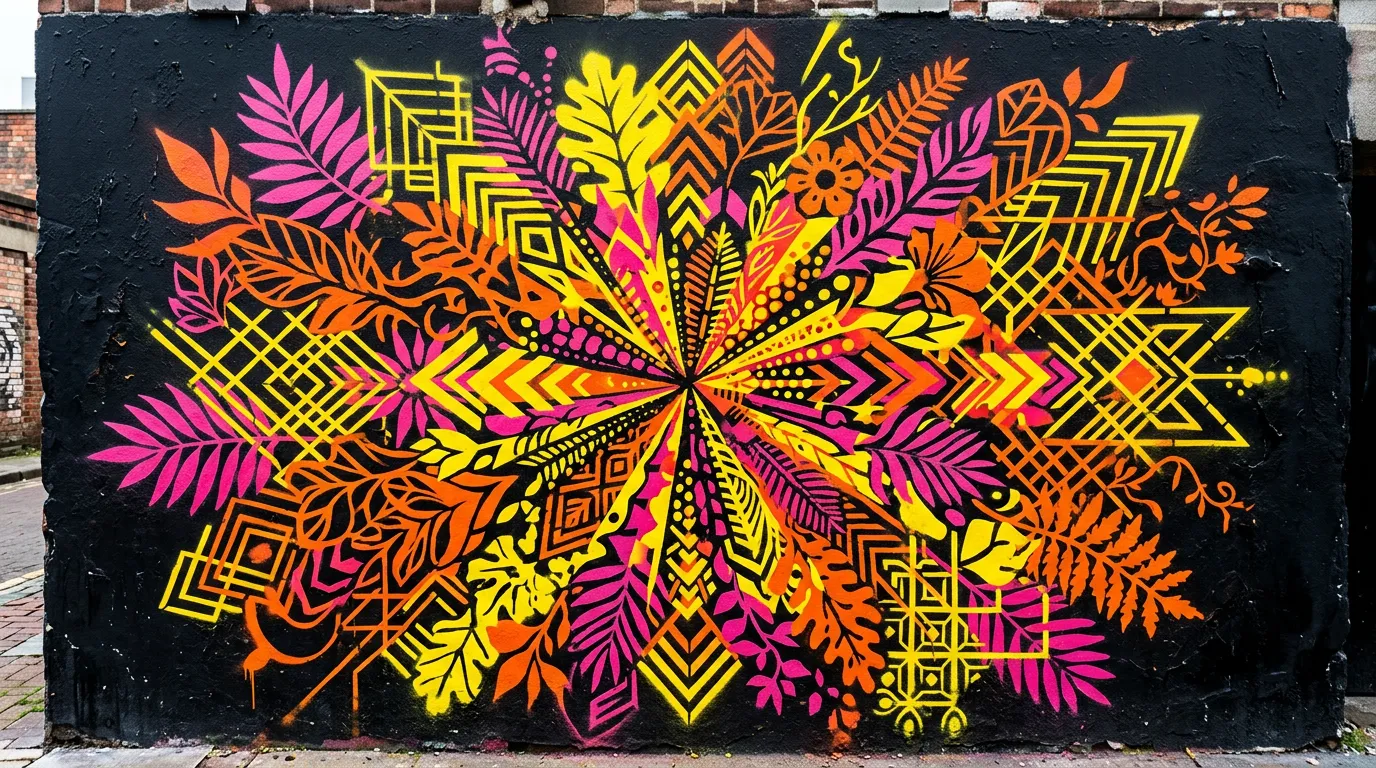
Stencil Design Ideas for Art - Inspire Your Next Creative Project
Stencilling is one of those techniques that sits beautifully at the intersection of control and creativity. You've got the precision of a defined shape, but infinite possibilities for how you layer, colour, and interpret it. Whether you're an experienced artist looking to refresh your practice or someone just discovering stencils, finding fresh design ideas can be genuinely motivating.
I've been working with stencils for years, and I've noticed that the best designs often come from looking at what artists were doing decades ago - combined with what's happening in contemporary work right now. Let me walk you through some concrete ideas you can use today.
Creative Concepts Worth Exploring
Geometric abstraction is having a real moment. Rather than traditional representational images, think about layering simple shapes - circles, triangles, hexagons - in complementary colours. The beautiful thing about geometry is that it doesn't require drawing skill; the design principles do the heavy lifting. Try creating a stencil with concentric circles in varying sizes, then overlay them with different colour progressions. Start light, build to darker shades.
Negative space designs deserve more attention than they typically get. Instead of filling in shapes, let the background become part of your composition. For example, a stencil of a bird doesn't have to be a solid silhouette - carve out the wings in a way that reveals the wall or canvas underneath. This approach is particularly effective on textured surfaces where that contrast becomes even more pronounced.
Botanical themes never really go out of fashion, and for good reason. Ferns, monstera leaves, wildflower arrangements - these work brilliantly at multiple scales. You can create a single large plant composition or build a repeating pattern by rotating a smaller stencil. The organic curves of botanical subjects actually benefit from the structured approach stencilling offers; it prevents them from becoming too chaotic.
Mandala-inspired patterns are excellent for developing symmetry skills. Start with a simple geometric centre point, then work outward with radiating lines and repeating motifs. These designs reward patience and precision, and they're genuinely meditative to create.
Learning from Art History
The stencil technique has roots in some genuinely important artistic movements. Pop art, particularly the work of Andy Warhol and Shepard Fairey, showed us that stencils could carry political weight and cultural commentary. Those bold, high-contrast colour blocks? You can absolutely recreate that energy in your own work.
Japanese stencil art, or katagami, offers another brilliant resource. These centuries-old designs often featured intricate detail within a refined framework - patterns that somehow managed to be both delicate and powerful. The precision required appeals to contemporary makers.
Street art and muralism have democratised stencilling, proving you don't need a gallery to create meaningful visual work. Look at how artists adapt their designs for urban surfaces - they think about scale, visibility, and weathering in ways that feed back into studio practice beautifully.
The key is this: historical references aren't about copying. They're about understanding what worked, why it worked, and how you can evolve those principles into something distinctly yours.
Experimenting with Patterns and Repetition
Here's something practical I've learned: the magic in stencil work often happens through repetition and variation. You don't need dozens of different stencils - you need one good design and the willingness to experiment with how you deploy it.
Try offset layering. Create a design, stencil it once, then shift your stencil slightly and apply it again in a different colour. The overlap creates depth and visual interest that reads as far more complex than it actually is. This technique works particularly well with semi-transparent paints.
Play with scale variation. Make multiple stencils of the same design in different sizes, then arrange them compositionally. A small version of your motif scattered around a large version creates rhythm and movement. Gallery walls often feature this approach - it's professional and accessible.
Explore colour gradients. Rather than flat application, try blending colours within a single stencil. Sponge application gives you more control here than spray paint. Start with your lightest colour, then sponge in progressively darker shades toward the edges. This adds dimension that catches people's attention.
Consider tonal variation. Not every stencil needs vibrant colour. Monochromatic designs - using multiple values of a single colour - can be striking. Especially effective on patterned wallpaper or highly textured walls where the tonal shifts create enough contrast.
Practical Steps Forward
Before you commit to a design, sketch rough versions at different scales. What looks elegant at A4 might feel crowded at A2, or vice versa. Consider your working surface too - a smooth canvas behaves entirely differently from textured plaster or brick.
Also think about your colour palette early. Not because you must stick rigidly to it, but because having boundaries actually sparks creativity. Two or three colours force you to be intentional about placement in ways that unlimited options don't.
For developing your ideas, LINK: Stencil Materials for Beginners offers solid guidance on what surfaces work best with different stencil types. And once you've got your concept sorted, LINK: Stencil Cutting Techniques walks through the precision skills you'll need.
Bringing It Together
The beauty of stencil art is that it welcomes experimentation. You can try elaborate multi-layer designs, bold geometric statements, or delicate botanical details. Each approach teaches you something about composition, colour theory, and your own aesthetic preferences.
The real creative breakthrough usually comes when you stop trying to follow rules and start asking "what if?" What if you used three colours instead of one? What if you layered the same stencil transparently? What if you worked at a much larger scale than you normally do?
Let FSM Pro help you bring your art to life! With intuitive design tools and reliable output, you can move from concept to finished stencil quickly, then focus on the satisfying part - actually creating. Your next masterpiece is waiting.
Ready to create? Start designing your stencil ideas today with Free Stencil Maker, and watch your artistic vision take shape.
Ready to make your own stencil?
Start Making Stencils